
Burnout is rarely just about doing too much. Most people who hit a wall are not working harder than everyone else. They are working in ways that do not match how their energy is built.
That distinction matters, because it changes how you deal with burnout. Generic advice on how to deal with burnout like “sleep more” or “take a holiday” can help temporarily. But if you go back to the same patterns, the same obligations, and the same way of making decisions, burnout comes back.
Human Design is a system that maps how your energy works. It shows your natural capacity for work and output, how you make decisions that feel right in your body, what drains you fastest, and what actually restores you. When you understand these things about yourself, burnout recovery stops being guesswork.
This guide will walk you through how to spot the signs of burnout in your specific design, where your burnout is likely coming from, and what to do about it, step by step.
If you don’t have your Human Design chart yet, you can generate it for free here. All you need is your date, time, and place of birth.
A quick check-in before you do anything else
Before you read further, take sixty seconds and notice:
In your body
Are you holding tension in your shoulders, jaw, or chest? Do you have headaches that keep returning? Are you tired even after a full night of sleep?
In your mind
Is everything taking longer to process than it should? Do you feel dread at the start of your day? Are you irritable about things that would not normally bother you?
In your energy
Do you feel wired but unable to switch off? Have the things you used to enjoy started to feel flat? Do you feel like you have no margin left for anything unexpected?
If you said yes to several of these, you are likely already in burnout or very close to it. The next step is not to push harder. It is to understand what brought you here.
The early signs of burnout in your Human Design type
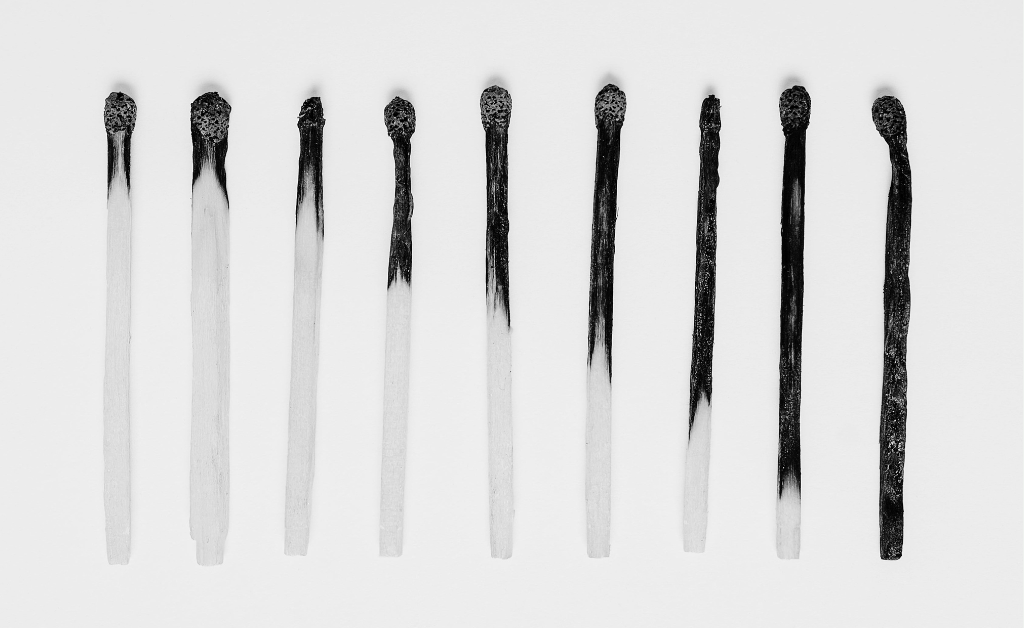
Think of your Human Design Type as a built-in early warning system. When you start moving against your design, specific signals show up. Most people dismiss these as laziness, sensitivity, or a bad week. They are not. They are your body telling you something needs to change before it forces you to stop.
Here is what burnout looks like in each type.
Generator
Generators have consistent, reliable energy, but only when they are doing things that genuinely excite them. Early signs of burnout in Generators include:
- pushing through tasks that feel flat or draining
- losing that sense of satisfaction that usually comes with completing work
- body-level fatigue that goes beyond normal tiredness
- a growing sense of frustration that is hard to explain.
Manifesting Generator
Manifesting Generators are fast-moving and multi-passionate by nature. When they burn out, it often looks like:
- rushing between tasks without finishing anything
- a scattered nervous system that feels constantly stimulated but never satisfied
- frustration building up mid-flow
- a sense of quitting things out of depletion rather than genuine completion
Projector
Projectors do not have the same consistent energy as Generators or Manifesting Generators. When they try to work like energy types, burnout follows fast. Watch for:
- bitterness that creeps in around work or relationships
- overthinking that will not switch off
- feeling unseen or undervalued
- crashing hard after periods of social or work output
Manifestor
Manifestors are here to initiate and lead, but they need autonomy and genuine rest to do it well. Early burnout signs include:
- irritation that builds quickly around demands or requests
- a strong need for more space than usual
- resentment toward obligations that once felt manageable
- avoiding messages or commitments that feel like too much input
Reflector
Reflectors are the most sensitive to their environment. Burnout symptoms for Reflectors often look like:
- feeling overwhelmed in busy or noisy spaces
- absorbing the emotions of people around them and struggling to separate those feelings from their own
- disrupted sleep
- a persistent sense of feeling unlike themselves
Where burnout comes from in each Human Design type

Burnout does not happen the same way for everyone. Your Human Design Type gives you a clear picture of your most common burnout pattern.
Generators and Manifesting Generators burn out most often from saying yes without a real body response. They agree to things from obligation, habit, or guilt rather than genuine excitement, and their energy slowly drains without being replenished.
Projectors burn out from working like energy types and skipping rest. They can keep up with Generators for a while, borrowing that energy in the moment, but they pay for it heavily afterward. Rest is not a reward for Projectors. It is a requirement.
Manifestors burn out from constant availability. They are not designed to be on call or respond to every request as it arrives. When their autonomy is consistently overridden, resentment builds and their capacity shrinks.
Reflectors burn out from staying too long in environments or relationships that do not feel right. Because they amplify what is around them, the wrong environment does not just drain them; it distorts their sense of self entirely.
Type-specific steps to recover from burnout
Burnout recovery is not one-size-fits-all. Here is what it looks like for each type.
Generators: How to recover from burnout
- Stop: Commit to one non-negotiable no this week. One thing you have been doing out of obligation that you will not agree to again right now.
- Reset: Before agreeing to anything new, take ten minutes to check your body. Does this feel like a yes or a no? Focus on how that feels physically in your body, not your head.
- Rebuild: Choose one task per day that genuinely satisfies you. Not ten things you should do. One thing that feels good to complete.
- Boundary script: “I can’t commit to that right now. I’ll let you know if that changes.”
Manifesting Generators: How to deal with burnout
- Stop: Pause before you pivot. Rushing between things feels productive but it is one of the fastest drains for your type.
- Reset: Try doing one thing at a time for thirty minutes before reassessing. Notice how your energy responds.
- Rebuild: Create two lists. Must-do and Nice-to-do. Work from the first list only until your energy returns.
- Permission: You do not have to finish everything you started. If your energy has genuinely moved on, that is information, not failure.
Projectors: Burnout recovery starts with rest
- Stop: Stop measuring your worth by how much you produce. Your value is in the quality of your insight, not the quantity of your output.
- Reset: Add micro-rest before you hit empty. Five minutes lying down between tasks counts. You do not have to wait until you crash.
- Rebuild: Choose one high-impact priority and let go of everything else. Delegate where you can. Drop what is not essential.
- Support: You work best when you feel recognised. Ask for that directly. Tell the people around you what kind of feedback or acknowledgment helps you most.
Manifestors: Rest and rebuild
- Stop: Cut the inputs that create the most pressure. Turn off notifications. Say no to last-minute requests. Reduce the constant stream of things requiring your attention.
- Reset: Schedule solitude like an appointment. Block it in your calendar and treat it as non-negotiable.
- Rebuild: Inform the people around you proactively. When people know what you are doing and why, there is less resistance, and resistance is one of the biggest energy drains for Manifestors.
- Boundary script: “I’m unavailable for a few days while I reset. I’ll be back on Friday.”
Reflectors: Nervous system regulation first
- Stop: Leave overstimulating spaces sooner. Even if it feels uncomfortable or rude, protecting your energy is not optional right now.
- Reset: Reduce noise, screens, and social intensity for at least forty-eight hours. Give your nervous system something quiet to settle into.
- Rebuild: Start tracking which environments feel clear and grounding versus which ones leave you feeling foggy or flat. Your environment is your most important recovery tool.
- Permission: Your energy reflects what is around you. That is not a weakness. It is how you are built. You are a mirror, not a machine.
A final note on how to deal with burnout
If you have felt numb, hopeless, or stuck in survival mode for several weeks, please do not try to work through this alone. The steps in this guide are a starting point, but they are not a substitute for professional support. A doctor, therapist, or counsellor can help you understand what is happening in your body and nervous system at a deeper level.
Human Design gives you a clear language for understanding your own energy. It can help you spot your patterns, reduce the guilt around needing rest, and make decisions that feel more aligned. But if you are already deep in burnout, use it alongside support, not instead of it.
If you want help identifying your personal burnout pattern in your chart and building a practical recovery plan that fits your design, book a 1:1 Human Design session. Together, we can look at exactly where your energy is leaking and what will genuinely help you rebuild.
FAQ: How to deal with burnout using Human Design
How do I know if I am burnt out or just tired?
Tiredness resolves with sleep. Burnout does not. If you have had adequate rest and still feel foggy, flat, dreading your day, or physically depleted, you are likely experiencing burnout rather than ordinary tiredness. The signs of burnout tend to persist and often get worse with time if nothing changes.
How long does burnout recovery take?
Burnout recovery is different for everyone and depends on how long you have been running on empty, your Human Design type, and the changes you are able to make to your environment and schedule. Some people feel a shift within a few weeks. For others, full recovery takes several months. There is no fixed timeline, and pushing for a faster recovery often slows it down.
What are the first signs of burnout?
The earliest burnout symptoms are often subtle: mild irritability, tasks taking longer than usual, a drop in the satisfaction or enjoyment you used to feel, and a growing sense of dread around your responsibilities. Many people miss these early signals and only recognise burnout once it has become more severe.
How does Human Design help with burnout?
Human Design shows you how your energy is actually built, not how you think it should work or how other people’s energy works. It helps you identify the specific patterns that lead to burnout for your type, understand what genuine rest looks like for you, and make decisions that replenish rather than drain your energy over time.
What is the best rest style for my Human Design type?
Generators rest best by doing things that feel genuinely satisfying, even low-effort activities count. Manifesting Generators need variety and permission to stop what is no longer exciting. Manifestors need solitude and freedom from input. Projectors need true downtime, away from output and people, ideally before they hit empty. Reflectors need calm, consistent environments and time away from stimulating spaces or relationships.
