If you’ve ever looked at your Human Design chart and wondered what your Profile actually means, you’re not alone. In this guide, you’ll get your Human Design Profile explained in a way that feels clear, simple, and grounded.
Your profile helps you understand how you move through life, how you learn, and why certain patterns feel so familiar. It’s one of the most practical pieces of your design because it shows you how you naturally show up in relationships, work, and everyday decisions. My goal here is to help you understand your Profile in a way that feels relatable and usable, so you can take what resonates and let it support you in your real life.
What is a Human Design Profile and why it matters
Your Human Design Profile is a simple way to understand the role you’re here to play in your life. It highlights the patterns that feel natural to you, the way you learn, and how you move through the world. In many ways, your Profile acts like a bridge between who you are on the inside and how others experience you on the outside.
A Profile is made of two numbers, and each number reflects a different part of you. One number is conscious, which means you usually recognize those qualities right away. The other number is more unconscious, so the people around you might notice it before you do. When these two sides come together, they create a fuller picture of your energy and the way you naturally operate.
Here’s what your profile can help you understand:
- How you learn and grow
- How you approach relationships
- What motivates you day to day
- How others tend to see you
- Where your natural strengths come from
- What kind of experiences shape your wisdom
Profiles feel so relatable because they put words to things you’ve likely felt your whole life. They help you see why certain patterns keep showing up and why some paths feel easier and more aligned than others. They also remind you that there’s nothing to fix.
How your Human Design Profile is created
Your Profile comes from two specific areas of your Human Design chart. These areas reflect who you are on the inside and how you move through the world on the outside. Even though the system behind it is detailed, the idea is actually simple once you break it down.
Your profile is made of two numbers.
- The first number is your conscious line.
- The second number is your unconscious line.
These two energies work together and shape how you think, how you show up, and how people experience you.
The conscious line comes from your Personality Sun and Earth.
This is the part of you that feels familiar. You can usually see these traits in yourself right away. You might even describe yourself in these terms without knowing anything about Human Design.
The unconscious line comes from your Design Sun and Earth.
This part runs deeper. It’s still you, but you may not notice it as easily. Often, the people around you pick up on these qualities before you do. When you learn about this side, it can feel like someone is gently naming something you’ve always sensed but couldn’t put into words.
Because your Profile blends these two sides, it often feels like a mix of strengths, desires, and challenges. You might understand things deeply, but learn through experience. You might crave connection, but also need time away to reflect. Most people feel both numbers working together, even if one feels stronger.
Here’s an example to make this easier to picture:
- If your conscious line prefers structure, you may love learning through knowledge and clarity.
- If your unconscious line prefers experience, you may also learn best by trying things and seeing what works.
Both are true. Both are you.
Your profile simply helps you make sense of how those pieces fit together.
The six Human Design Profile lines explained
Every Human Design Profile is made from two of six possible “lines.” You can think of these lines as the building blocks of your personality. Each line describes a different way of learning, relating, and moving through life. When you understand the qualities of each line, it becomes much easier to understand your full profile.
| Line | Nickname | Core theme |
| 1 | The Investigator | Learning through knowledge and building strong foundations |
| 2 | The Natural | Leaning into natural gifts and ease |
| 3 | The Martyr | Learning through trial and error |
| 4 | The Opportunist | Growing through relationships and community |
| 5 | The Heretic | Offering practical, innovative solutions |
| 6 | The Role Model | Living through three life phases and sharing wisdom |
Understanding the 1/3 Profile
If you’re a 1/3, you learn best through a mix of research and real-life experience. The “1” in your profile wants clarity and a strong foundation. The “3” learns by trying things, making mistakes, and discovering what actually works. When these two energies come together, you become someone who gains wisdom through hands-on exploration, not perfection.
I’m also a 1/3, and understanding this part of my design brought me so much relief. It helped me accept that I’m meant to learn through direct experience, even when that means getting things wrong along the way. It also softened my perfectionism. I started to let go of the idea that everything I create needs to be flawless before I share it. That shift alone made space for more creativity, ease, and trust in my process.
Why the 1/3 is both curious and resilient
- The 1 gives you a natural pull toward learning and depth.
- The 3 gives you resilience and teaches you through real experience.
You’re not designed to get things right on the first try. You’re designed to explore, adjust, and grow.
Common challenges
- Feeling pressure to be perfect
- Holding back because you think you need to know more
- Being hard on yourself when something doesn’t work
How to work with your design
- Give yourself time to learn, then try things in real life
- See mistakes as information, not failure
- Share your journey as you go, even if it feels imperfect
In daily life
- Work: You thrive when you can research and experiment.
- Decisions: Clarity often comes after trying something.
- Relationships: You need space to learn through experience and grow together.
The 1/3 profile shines when you let yourself be both the learner and the explorer. The more you trust your process, the more confident and aligned you feel.
Understanding the 4/6 Profile
If you’re a 4/6, you’re designed to learn and grow through a blend of connection and life experience. The “4” in your profile is all about building meaningful relationships and doing life alongside people you trust. The “6” brings a natural wisdom that develops over time. Together, these energies create someone who is warm, thoughtful, and here to lead by example.
The 4 helps you build strong, loyal relationships.
The 6 helps you see things from a higher perspective.
Because of this, people often come to you for guidance or encouragement, even before you feel “ready.” You have a calming presence, and your lived experience carries a natural authority.
Your three-part life journey
The 6 line moves through life in phases, and if you’re a 4/6, you’ll likely feel these shifts:
- Before age 30: A time of trying things, experimenting, and learning through experience.
- 30–50: A period of stepping back a little, reflecting, and gaining clarity.
- 50 and beyond: A phase where everything you’ve learned comes together, and your wisdom naturally shines.
This doesn’t mean you have to wait to feel successful or grounded. It simply means your confidence and clarity deepen with time, and life tends to feel more aligned as you grow.
Why relationships matter so much to a 4/6
You’re designed to be supported by the people you trust. Opportunities often come through your network, and your most aligned connections are usually the ones that feel warm, steady, and genuine. You don’t need a huge community. You need the right people.
Common challenges
- Feeling torn between wanting connection and needing time alone
- Worrying about being misunderstood or rejected
- Trying to offer wisdom before you feel ready
- Feeling pressured to have everything figured out early in life
These experiences are common, and none of them mean you’re off path. They’re simply invitations to move at your own pace.
How to work with your design
- Invest in relationships that feel supportive and mutual
- Give yourself permission to step back when you need space
- Share your perspective when you feel grounded, not out of pressure
- Trust that your wisdom develops naturally over time
- Let your lived experience guide you, not expectations
In daily life
- Work: You thrive in environments built on trust and collaboration
- Decisions: You gain clarity through reflection and connection
- Relationships: You need depth, loyalty, and steady support
At your best, you’re a role model within your community. You show people what it looks like to grow, learn, and live authentically. When you trust your timing and invest in the right relationships, your natural wisdom becomes a powerful guide for others.
Other common Profiles and what makes them unique
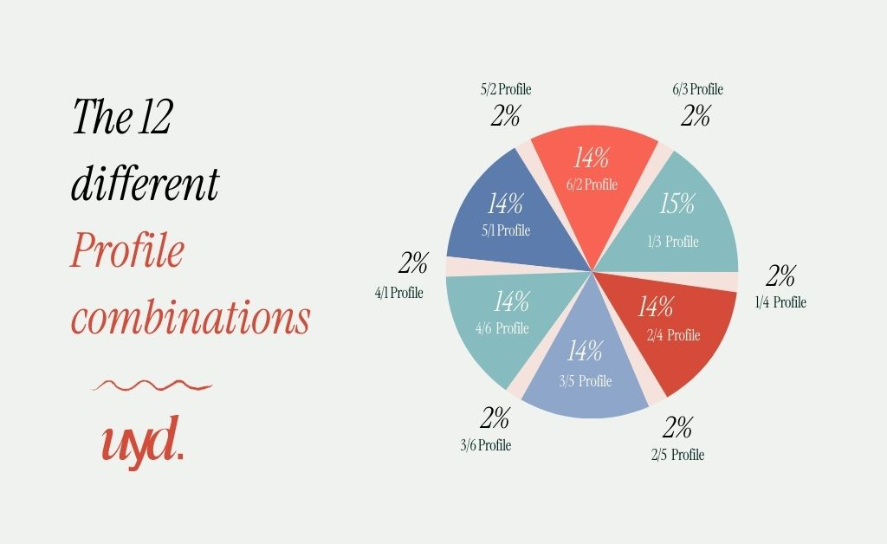
Beyond the 1/3 and 4/6, there are several other Human Design Profiles that blend the six lines in different ways. Each profile has its own rhythm, strengths, and way of learning. Here’s a simple overview to help you understand the essence of each one.
2/4 Profile
This Profile is a mix of natural talent and connection. The 2/4 often needs time alone to recharge and lean into what feels easy and natural. Their best opportunities come through relationships, especially when they’re being their authentic selves.
3/5 Profile
The 3/5 learns by trying things and discovering what works. Their experiences teach them powerful lessons, and they’re here to share practical solutions with others. They’re relatable, honest, and often ahead of their time.
5/1 Profile
This Profile blends problem-solving with a need for strong foundations. The 5/1 is great at offering clear, grounded solutions, but they feel most confident when they’ve taken time to study and understand something deeply.
6/2 Profile
The 6/2 mixes wisdom with natural talent. They often move through life in phases, gaining clarity and perspective as they grow older. They need space to retreat and reflect, but they also carry a quiet wisdom that inspires others.
6/3 Profile
This Profile is a combination of experimentation and long-term wisdom. The 6/3 learns through direct experience early in life and naturally becomes more grounded and insightful over time. They’re here to evolve and share their lived wisdom with others.
How to use your Profile in everyday life
Having your Human Design Profiles explained is helpful, but the real value comes from using it in your daily life. Your Profile can give you a gentler, more grounded way to make decisions, relate to others, and understand your own patterns. Instead of expecting yourself to operate like everyone else, you get to honor the way you naturally move through the world.
Make choices with less pressure
Your Profile shows you how you’re designed to learn and grow. When you understand that, you can take the pressure off yourself to make the “perfect” decision every time.
- If you learn through experience, let yourself try things.
- If you need a strong foundation, give yourself time to research.
- If you thrive through connection, talk things through with people you trust.
Your process is valid. Let it lead you.
Soften the self-criticism
A lot of people use their Profile as permission to stop expecting themselves to fit into patterns that never felt right. It helps you release the stories that say you should be faster, more certain, more social, or more perfect. Instead, you get to meet yourself where you are.
Bring more compassion into your relationships
Your Profile doesn’t just describe you. It also explains how you naturally relate to others.
- Some profiles crave depth and loyalty
- Some need space to retreat
- Some rely on real-world experiences
- Some learn best through conversation
- Some gain clarity slowly, over time
When you understand this, you stop taking things so personally. You also start giving others more room to show up in their own way.
Use your profile to support your work life
Your profile can guide the way you approach projects, timelines, and creative work.
- If you’re a foundation-builder, plan time to learn before you act
- If you’re an experimenter, start small and adjust as you go
- If you’re a connector, lean on your community
- If you’re a problem-solver, choose the challenges that feel aligned
- If you’re a role model, trust that your clarity grows with experience
Working in a way that matches your profile makes everything feel more natural and sustainable.
Blend your profile with your type and authority
- Your Profile is only one part of your design, but it pairs beautifully with your Human Design Type and Authority.
- Your Type shows you how your energy works.
- Your Authority shows you how to make aligned decisions.
- Your Profile shows you how you learn and relate as you move through life.
When all three work together, you feel more grounded, more confident, and more aligned day to day.
Final thoughts
Your Human Design Profile is not here to define you or limit you. It’s here to help you understand yourself with more compassion and clarity. When you learn the way you’re naturally built to grow, connect, and make sense of the world, life becomes a little easier. You stop fighting your patterns and start working with them.
If you ever want support with integrating your profile or exploring how it weaves into your full chart, I’m here. You don’t have to do this alone. 1:1 Human Design coaching gives you space to understand your Design in a way that feels personal, practical, and aligned with the real life you’re living.