You pulled up your Human Design chart and now you are staring at a screen full of shapes, lines, numbers, and colours. It looks like it should mean something, but nothing clicks. You close the tab and move on.
That reaction is common. Your BodyGraph holds a lot of information, and without a clear starting point, it feels like trying to read a document in a language you have never studied. But your BodyGraph is not designed to confuse you. It is designed to show you how your energy works so you can understand yourself more clearly.
Learning how to read your BodyGraph does not require you to memorise every detail. You need a simple entry point and a practical reason to keep going. This guide gives you both. You will learn the key pieces of your chart, what they reveal about your patterns, and how to use your BodyGraph for personal growth in a way that actually applies to your daily life.
What a BodyGraph actually is
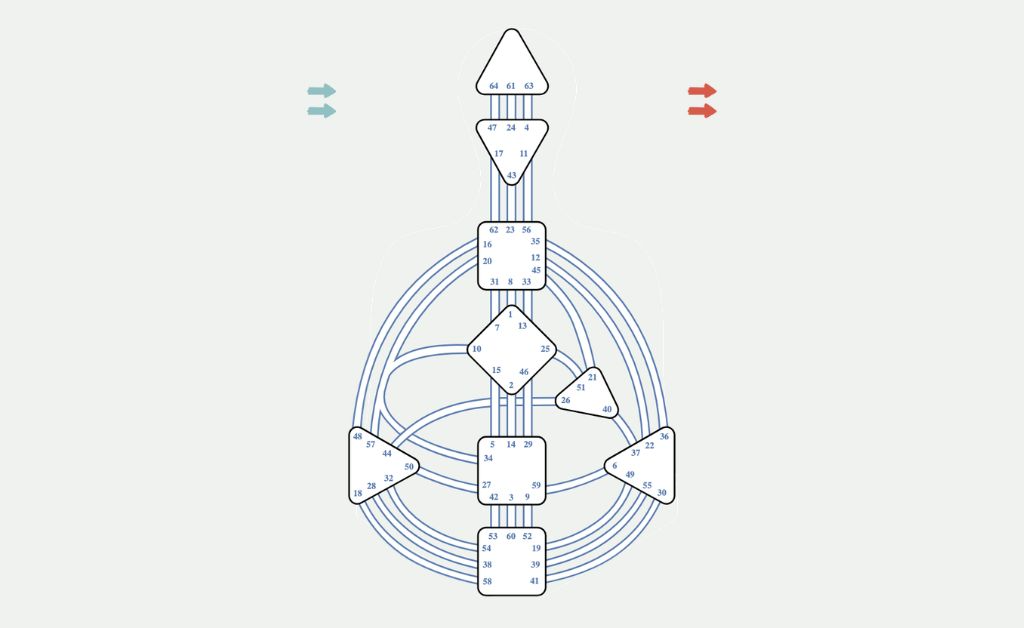
A BodyGraph is the visual chart at the centre of the Human Design system. It maps your energetic wiring based on your date, time, and place of birth. Everything in your design gets displayed on this one chart.
When you look at your BodyGraph, you see nine Centres, the channels connecting them, and the gates within those channels. Each piece carries specific information about how you operate. Your BodyGraph shows you how you make decisions, how your energy moves through the day, where you are consistent, and where you are more open to outside influence.
Your BodyGraph is not a personality label or a fixed diagnosis. It is a tool for self-understanding. It shows tendencies, not limitations. Learning how to read your BodyGraph means learning to use that information to make better choices, not boxing yourself into a category.
Why reading your BodyGraph supports personal growth
Personal growth works best when it starts with honest self-awareness. Most approaches ask you to change before you understand what you are working with. Your BodyGraph reverses that. It gives you a clear picture of your patterns first, then helps you decide what actually needs to shift.
When you understand your Human Design BodyGraph, you start to recognize patterns that have been running in the background for years. You see why certain situations drain you. You understand why some decisions feel heavy while others feel easy. You get language for experiences you have felt but never been able to explain.
Using your BodyGraph for personal growth can help you recognise emotional patterns that repeat, understand where burnout and frustration come from, build better boundaries with less guilt, make decisions with more trust in yourself, and stop comparing your process to how other people operate.
Growth becomes more sustainable when it is grounded in BodyGraph self-awareness instead of pressure to perform.
Start here: The three most important parts of your BodyGraph
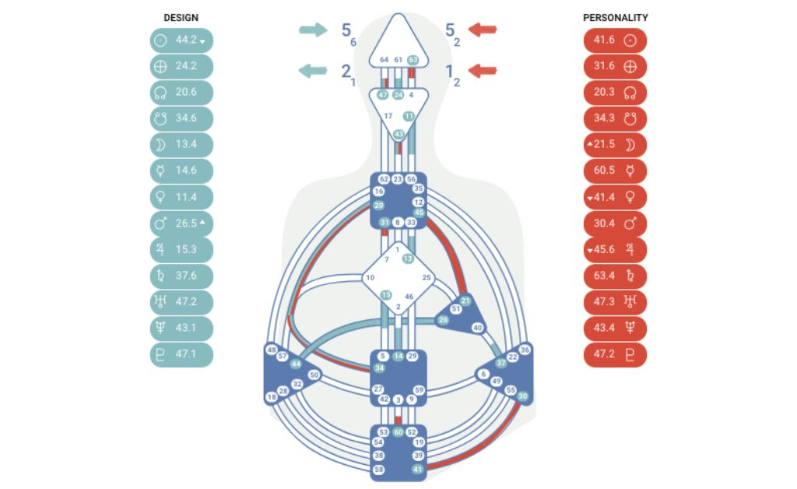
If your chart feels overwhelming, narrow your focus. You do not need to understand everything at once. Start with three pieces: your Type, your Strategy, and your Authority.
These three parts give you the most practical foundation for everyday life. Type shows you how your energy works and what your natural role is. Strategy shows you how to interact with opportunities and people with less friction. Authority shows you how to make decisions that feel right in your body.
Everything else in your chart adds depth, but these three pieces are where reading your Human Design chart becomes immediately useful.
Step 1: Read your Type
Your Type is the easiest and most helpful place to begin when you are learning how to read your BodyGraph. It describes how your energy operates and how you are designed to engage with life.
There are five Types in Human Design. Each one has a different energy pattern.
- Generators carry steady, sustainable energy and thrive through satisfaction.
- Manifesting Generators move fast with multi-passionate energy and need variety.
- Projectors are built for focused insight and guiding others.
- Manifestors initiate and operate with independence.
- Reflectors are sensitive to their environment and process through reflection.
Personal growth angle
Your Type reveals where you may be working against your natural rhythm. If you are a Projector pushing like a Generator, burnout makes sense. If you are a Manifestor waiting for permission that was never required, frustration builds.
Reflect on this: what happens when you try to work like someone else? What feels easier when you work with your own energy instead of against it? These questions are part of how to understand your BodyGraph at a practical level.
Step 2: Read your Strategy
Strategy is the piece that makes your BodyGraph practical. It shows you how to move through life with less resistance. Each Type has a specific Strategy, and when you follow it, you spend less energy forcing outcomes that were never going to work.
Strategy applies to how you interact with opportunities, relationships, and decisions. It is not a rigid rule. It is a guideline that reduces unnecessary friction.
Personal growth angle
Strategy helps you stop chasing, forcing, and second-guessing. It supports more trust in timing and less pressure to manufacture results.
Ask yourself: where am I pushing instead of responding? Where am I rushing clarity? Where might I need to trust timing more? These prompts connect directly to how you read your BodyGraph and apply it to daily patterns.
Step 3: Read your Authority
Authority is one of the most powerful parts of your BodyGraph for building self-trust. It shows you how you are designed to make decisions. Not everyone processes decisions the same way, and your Authority tells you where your clarity actually lives.
Some people find clarity through emotions over time. Others get a gut response in the moment. Some need to talk it through. Your Authority is specific to your chart, and learning it changes how you approach every decision you face.
Personal growth angle
Most people have been trained to make decisions from urgency, logic, or fear. Authority reconnects you with your own way of knowing. This is where BodyGraph self-awareness becomes deeply personal.
Reflect on this: how do you usually make decisions when you feel pressure? What changes when you give yourself permission to decide differently? Reading your Human Design chart at this level shifts how you relate to your own judgment.
What your Centres show you about self-awareness
Once you have a handle on Type, Strategy, and Authority, Centres are the next layer to explore. Your BodyGraph contains nine Centres, and each one represents a different life theme: pressure, emotion, identity, willpower, communication, direction, and more.
Each Centre is either defined or undefined in your chart. Defined Centres carry consistent energy. These are areas where you tend to feel steady and reliable. Undefined or open Centres absorb and amplify energy from the people around you. These are areas where you may be more sensitive or more easily influenced.
Why open Centres matter for growth
Your open Centres often hold your biggest lessons in self-awareness. They are the places where you are most likely to take on pressure, emotion, or expectations that are not yours.
You do not need to memorise all nine Centres to start learning from them. Focus on one question: where am I consistent, and where am I more influenced by others?
Here few examples to get you started:
If you have an open Emotional Centre, you may amplify other people’s emotions and mistake them for your own. An open Head Centre can create constant pressure to figure everything out. An open Heart Centre often drives the need to prove yourself. An open Sacral Centre may make it hard to know when enough is enough.
Each of these patterns becomes clearer when you learn how to read your BodyGraph and connect the Centres to your lived experience.
Encourage curiosity, not self-judgment
One of the most helpful parts of reading your BodyGraph is understanding conditioning. Conditioning is what happens when you absorb patterns, beliefs, and pressure from the world around you. Your undefined Centres are where most of that conditioning lives.
Undefined areas in your chart are not weaknesses. They are often where your deepest wisdom develops over time. The goal is not to fix them. The goal is to recognise where you have been operating on borrowed energy or borrowed beliefs.
A lot of personal growth is learning to tell the difference between what is truly yours and what you picked up from other people. Your BodyGraph gives you a clear framework for that process.
Reflect on this: where do you feel the need to prove, perform, or keep up? Which parts of you feel grounded, and which parts feel reactive? These are the questions that turn the Human Design bodygraph from an interesting chart into a practical growth tool.
Final thoughts on how to read your BodyGraph

You do not need to understand your entire chart to start. Learning how to read your BodyGraph is really about learning how to read yourself with more honesty.
Start with your Type. Notice where your energy feels natural and where it feels forced. Add your Strategy and observe where you push against it. Explore your Authority and pay attention to how your decisions feel when you trust it. Then look at your Centres and notice where outside influence runs the show.
Each layer adds depth. None of them require perfection. The point is observation, not mastery.
If you want support applying this to your own chart, book a 1:1 Human Design session with me. Together we will explore your BodyGraph, your patterns, and your next steps in a practical and grounded way.
